
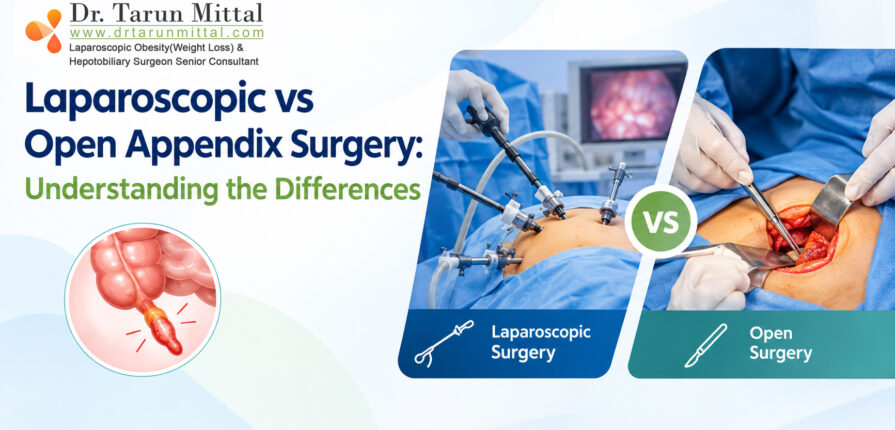
Laparoscopic vs Open Appendix Surgery: Understanding the Differences
Appendicitis can turn nasty quickly. One minute, it feels like an uncomfortable stomach ache. A few hours later, the pain may become sharp, persistent, and impossible to ignore.
When surgery is needed, patients often hear two terms: laparoscopic appendix surgery and open appendix surgery. Both aim to remove the inflamed appendix, but the way they reach it is quite different.
And yes, that difference matters.
What Is Laparoscopic Appendix Surgery?
Laparoscopic appendectomy is a minimally invasive procedure. Instead of making one large incision, the surgeon makes a few small cuts in the abdomen. A tiny camera guides the surgeon while specialised instruments are used to remove the appendix.
Think of it as working through small windows rather than opening the entire door.
For many suitable patients, laparoscopic surgery can mean smaller scars, less postoperative discomfort, a shorter hospital stay and a quicker return to normal activities. The approach also allows the surgeon to inspect the abdominal cavity during the procedure, which can be useful when the diagnosis isn’t completely straightforward.
This is one reason patients looking for the Best Laparoscopic Surgeon in Delhi often ask specifically about minimally invasive treatment.
What Is Open Appendix Surgery?
Open appendectomy uses a single, larger incision in the lower-right area of the abdomen. Through this opening, the surgeon directly accesses and removes the appendix.
Old-fashioned? Not at all.
Open surgery still has an important place in emergency surgical care. If the appendix has ruptured, there is extensive infection, an abscess, complicated inflammation, or laparoscopic access isn’t considered appropriate, an open approach may sometimes be safer or more practical.
The decision isn’t about choosing the more modern-sounding option. It’s about choosing the operation that fits the patient’s actual condition.
Laparoscopic vs Open: What’s the Difference?
The biggest difference is the surgical access.
Laparoscopic surgery generally offers:
- Smaller incisions
- Less visible scarring
- Reduced postoperative discomfort for many patients
- Earlier mobilisation
- Potentially shorter recovery
- A quicker return to everyday activities
Open surgery generally involves:
- One larger incision
- A more noticeable scar
- Greater wound discomfort in some patients
- A potentially longer recovery period
But here’s the catch: these aren’t fixed rules for every patient. A complicated appendix infection can change the entire picture.
Which Surgery Is Better?
There isn’t one universal answer.
For uncomplicated appendicitis, laparoscopic appendectomy is commonly preferred when the patient is medically suitable. In complicated cases, however, the surgeon may recommend a different approach based on the extent of infection, previous abdominal surgeries, the patient’s overall health and what is found during the operation.
That’s where surgical judgement comes in.
Experience.
Dr Tarun Mittal evaluates the patient’s condition before deciding on the appropriate surgical approach rather than treating every case with a one-size-fits-all method. Patients searching for the Best Appendix Surgeon in Delhi should look beyond the procedure name and consider the surgeon’s experience, technique and ability to manage unexpected complications.
Appendix surgery isn’t simply about removing an appendix. Timing matters. Technique matters. And so does the person holding the instruments.
If you have persistent pain, particularly pain that begins around the navel and shifts towards the lower-right abdomen, don’t keep waiting for it to disappear. Appendicitis can progress rapidly and requires prompt medical assessment.