
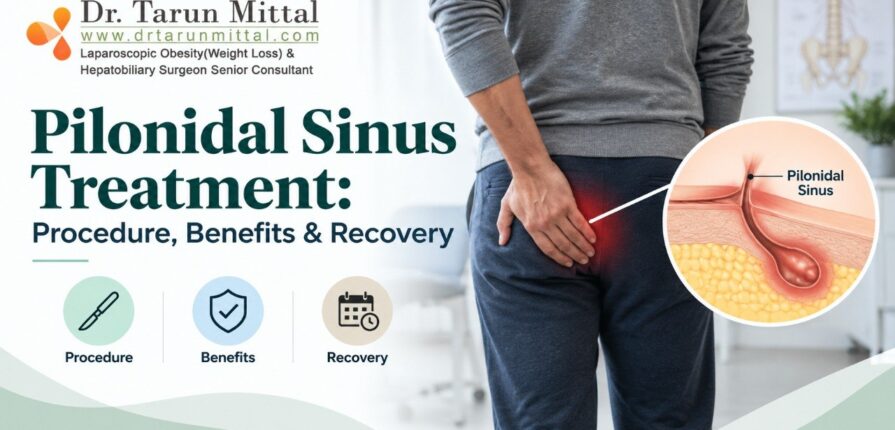
Pilonidal Sinus Treatment: Procedure, Benefits & Recovery
A small opening near the tailbone can become a surprisingly big problem.
Pain. Swelling. Pus. Sometimes, a foul-smelling discharge that makes sitting for long hours genuinely uncomfortable. This may be a pilonidal sinus, a condition that develops when hair and debris become trapped beneath the skin around the cleft of the buttocks.
And no, it isn’t something you should simply ignore and hope it disappears.
When pilonidal sinus keeps returning, proper evaluation and treatment become important. Dr Tarun Mittal, a specialist in minimally invasive and laparoscopic surgery, can assess the condition and determine the most appropriate treatment based on its severity and recurrence.
What Is a Pilonidal Sinus?
A pilonidal sinus is a small tunnel or cavity that forms underneath the skin, usually near the tailbone. It can develop when loose hair gets pushed into the skin because of friction, prolonged sitting, sweating or pressure.
Initially, you may notice nothing more than a tiny pit.
Then comes the trouble.
An infected sinus can become painful, red and swollen. An abscess may form, producing pus and making everyday activities such as sitting, walking or exercising unpleasant. Some people experience repeated episodes where the swelling settles temporarily and then returns.
That’s usually the point where medical treatment deserves serious attention.
Pilonidal Sinus Treatment
Treatment depends on whether the sinus is infected, how extensive it is and whether you’ve had previous episodes.
If an abscess has formed, the immediate priority may be drainage of the accumulated pus to control the infection and relieve pressure. Antibiotics may be recommended in selected situations, particularly when there are signs of surrounding infection.
For chronic or recurrent pilonidal sinus, surgery may be considered.
The procedure involves removing the sinus tract and affected tissue so the underlying problem can be addressed rather than repeatedly treating the same flare-up. Depending on the individual case, the surgeon may choose an appropriate surgical technique and wound-closure approach.
This isn’t a one-size-fits-all condition. A sinus that has appeared once isn’t necessarily managed in the same way as a complex, repeatedly infected sinus.
Benefits of Treatment
Proper treatment can help:
- Remove infected sinus tracts
- Reduce recurring pain and swelling
- Control repeated discharge and infection
- Improve comfort while sitting and moving
- Reduce the chances of recurrent episodes
- Help you return to normal daily activities
The goal isn’t simply to close the skin. It is to deal with the sinus and reduce the factors that allow the problem to keep coming back.
Recovery After Pilonidal Sinus Surgery
Recovery varies depending on the procedure and the individual’s health.
Your surgeon may advise keeping the area clean and dry, avoiding prolonged pressure on the wound and following specific dressing instructions. Hair control around the area may also be recommended because trapped hair can contribute to recurrence.
Don’t rush it.
Even when pain improves quickly, the wound still needs time to heal properly. Following postoperative instructions can make the recovery smoother and help prevent complications.
When Should You See a Surgeon?
If you notice a painful lump, recurrent swelling, pus, bleeding or persistent discharge near your tailbone, get it evaluated rather than repeatedly treating the symptoms yourself.
Dr Tarun Mittal focuses on surgical management using modern techniques designed around the patient’s condition. A proper examination can clarify whether conservative care, drainage or definitive surgery is appropriate.
Pilonidal sinus can be stubborn.
But with the right diagnosis and treatment plan, it doesn’t have to keep disrupting your life.