
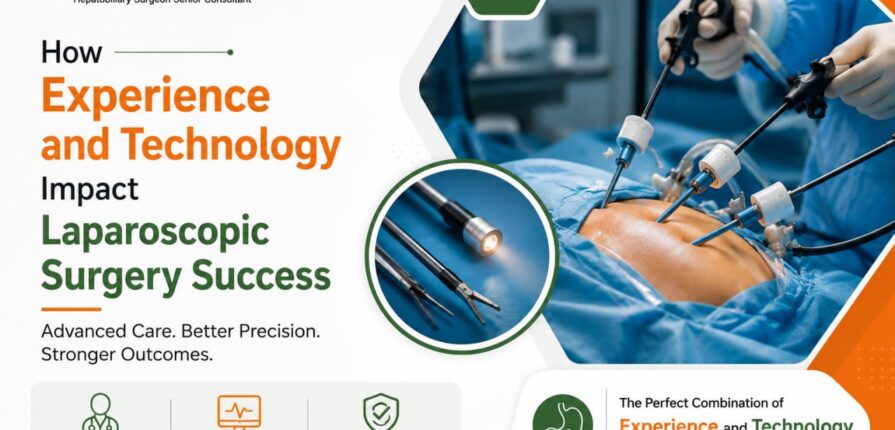
A surgeon’s hand matters. Technology matters too. But neither works at its best without the other.
People often assume that laparoscopic surgery is simply about making smaller cuts. It isn’t. That’s like saying a Formula One car wins races because it has four tyres. The real difference lies in who’s behind the controls and how confidently they respond when something unexpected happens—because surgery rarely follows a perfectly straight script.
Which brings us to the real question.
What actually determines the success of laparoscopic surgery?
The answer sits somewhere between years of surgical experience and the intelligent use of modern medical technology. When both come together, patients usually benefit from greater precision, faster recovery, reduced pain, and lower chances of complications. That’s exactly why so many patients looking for the Best Laparoscopic Surgeon in Delhi spend time researching a surgeon’s expertise before making a decision.
Experience Is More Than Just Years
Experience isn’t measured only by the number of years printed on a clinic wall.
It’s measured in decisions.
A skilled laparoscopic surgeon has seen anatomy that doesn’t always look like textbook diagrams. They’ve managed unexpected bleeding, recognised tiny variations in organs, and adapted their approach within seconds instead of minutes. Those instincts aren’t downloaded into a machine. They’re earned—one surgery at a time.
Think about driving through Delhi traffic. Anyone can steer a car on an empty highway. It takes a different level of judgement to navigate a crowded intersection during rush hour without losing patience or control. Surgery works in much the same way.
That’s one reason patients choose Dr Tarun Mittal, whose extensive experience in minimally invasive surgery allows him to approach every case with careful planning, calm judgement, and refined surgical technique.
Technology Has Changed the Rules
Now let’s talk about the machines.
Modern laparoscopic surgery has evolved dramatically over the past decade. High-definition cameras reveal structures that older systems simply couldn’t display with the same clarity. Advanced energy devices seal blood vessels more efficiently. Precision instruments allow surgeons to operate through tiny incisions while protecting surrounding tissues.
Impressive.
But here’s the thing—technology doesn’t perform surgery. Surgeons do.
A crystal-clear camera won’t help if the person holding the instruments can’t interpret what they’re seeing. Likewise, the most sophisticated equipment can’t replace years of clinical decision-making when an unexpected challenge appears during an operation.
Technology amplifies expertise. It doesn’t create it.
Why Precision Makes Such a Difference
Tiny movements.
Tiny cuts.
Big impact.
One of the greatest strengths of laparoscopic surgery is precision. Smaller incisions generally mean less trauma to the body, which often translates into reduced pain, minimal blood loss, quicker mobilisation, and smaller scars. Patients frequently return to their daily routine sooner than they would after traditional open surgery.
Still, achieving these outcomes isn’t automatic.
A surgeon must maintain excellent depth perception while watching a monitor rather than directly viewing the surgical field. Hand-eye coordination becomes incredibly important. Even subtle wrist movements can influence the outcome.
That’s where experience quietly earns its place.
Better Technology Supports Better Recovery
Recovery doesn’t begin after surgery.
It begins during surgery.
When tissues are handled gently, bleeding is minimised, and unnecessary trauma is avoided; the body has less work to do while healing. Many patients undergoing laparoscopic procedures experience shorter hospital stays and can resume normal activities sooner, depending on the nature of their operation and overall health.
Granted, every patient heals differently. Age, existing medical conditions, nutrition, and lifestyle all influence recovery. No ethical surgeon promises identical results for everyone.
Still, careful surgical planning combined with modern technology creates a strong foundation for successful healing.
Choosing the Right Surgeon Matters
Patients often compare hospitals.
They compare prices.
Sometimes they compare operation packages online.
Fair enough.
But one question deserves far more attention: who is actually performing the surgery?
Choosing an experienced surgeon means choosing someone who understands not only how to perform a procedure but also when to modify the approach, anticipate risks, and make confident decisions under pressure. Those qualities become especially valuable during complex laparoscopic procedures where precision leaves little room for hesitation.
If you’re searching for the Best Laparoscopic Surgeon in Delhi, it’s worth looking beyond advertisements and focusing on experience, surgical outcomes, patient trust, and commitment to modern minimally invasive techniques.
Final Thoughts
Successful laparoscopic surgery isn’t the result of advanced equipment alone, and it certainly isn’t built on experience alone.
It’s the partnership between skilled judgement and evolving technology that makes the real difference.
Dr Tarun Mittal combines years of surgical expertise with advanced laparoscopic techniques to deliver patient-focused care tailored to each individual’s condition. When knowledge, technology, and thoughtful decision-making work together, patients don’t simply undergo surgery—they gain the confidence that they’re in capable hands from the very beginning.